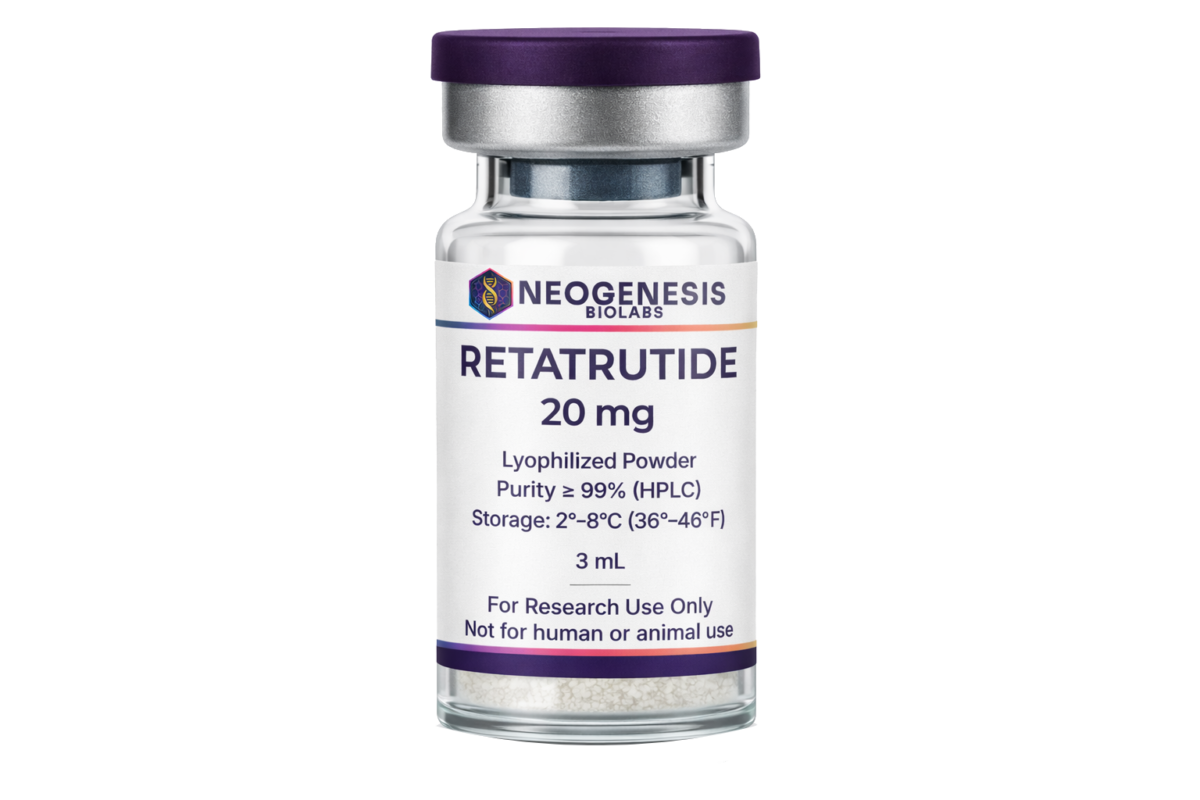
Form
Lyophilized powder
Purity
>=98% (HPLC)
Molecular Weight
4730.4 Da
Storage
2-8C, protected from light
Use
For research purposes only. Not for human or animal use.
CAS
2381272-16-6
Longevity
Retatrutide
Price range: $125.00 through $300.00
99%+ Purity
Lab Tested
Research Grade
Lyophilized
COA Available
Fast Shipping
About This Compound
Retatrutide
Retatrutide 20mg — Research Overview
Retatrutide is a next-generation synthetic peptide studied for its simultaneous activation of three metabolic receptors: GIP (glucose-dependent insulinotropic polypeptide), GLP-1 (glucagon-like peptide-1), and Glucagon. This triple-agonist (GGG) mechanism distinguishes Retatrutide as one of the most advanced metabolic pathway compounds in preclinical research.
Neogenesis Bio Labs supplies Retatrutide as a lyophilized peptide at ≥98% purity, verified by third-party HPLC and mass spectrometry analysis.
What Researchers Study Retatrutide For
- Triple Receptor Activation — simultaneous GIP, GLP-1, and Glucagon receptor co-stimulation pathway studies
- Metabolic Regulation — energy homeostasis, caloric balance, and adipose tissue metabolism research
- Lipid Metabolism — hepatic fat reduction, triglyceride modulation, and lipid profile research
- Glycemic Pathway Research — insulin secretion, glucagon suppression, and glucose homeostasis studies
- Body Composition — lean mass preservation models concurrent with fat mass reduction research
- GGG vs. Dual Agonist Comparison — head-to-head research comparing triple vs. single/dual agonist pathway profiles
Frequently Asked Questions
What makes Retatrutide a triple agonist?
Retatrutide is engineered to bind and activate three distinct G-protein coupled receptors: GIP-R, GLP-1R, and Glucagon-R. Each controls complementary aspects of metabolic regulation — insulin secretion, energy expenditure, and hepatic glucose output.
How does Retatrutide compare to Tirzepatide in research models?
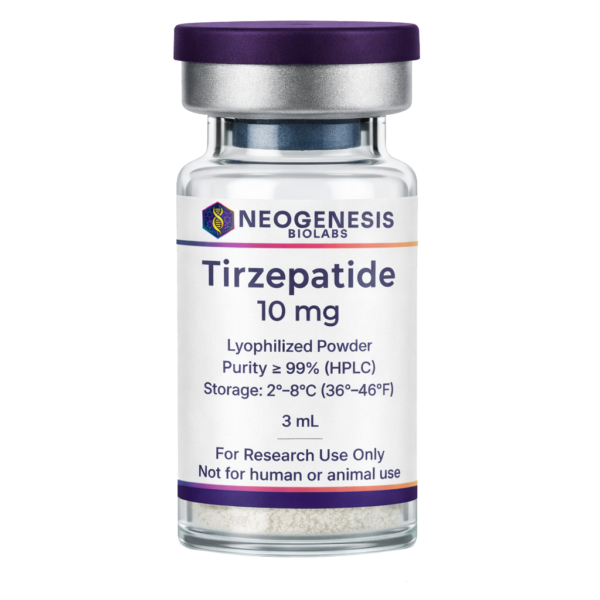
Tirzepatide activates GIP and GLP-1 receptors (dual agonist). Retatrutide adds glucagon receptor activation as a third mechanism, driving additional energy expenditure through hepatic glucose production suppression and thermogenic pathways.
What reconstitution approach is used?
Lyophilized Retatrutide is typically reconstituted with bacteriostatic water. Post-reconstitution stability is maintained for up to 28 days at or below 4°C. Store lyophilized powder at 2-8°C prior to reconstitution.
Is a Certificate of Analysis included?
Yes. Every vial ships with a third-party COA confirming compound identity, purity (≥98% HPLC), and peptide integrity.
For Research Use Only. Retatrutide supplied by Neogenesis Bio Labs is intended exclusively for in-vitro research, laboratory study, and scientific investigation. Not for human consumption, veterinary use, or clinical application.
You May Also Like
Recommended Products