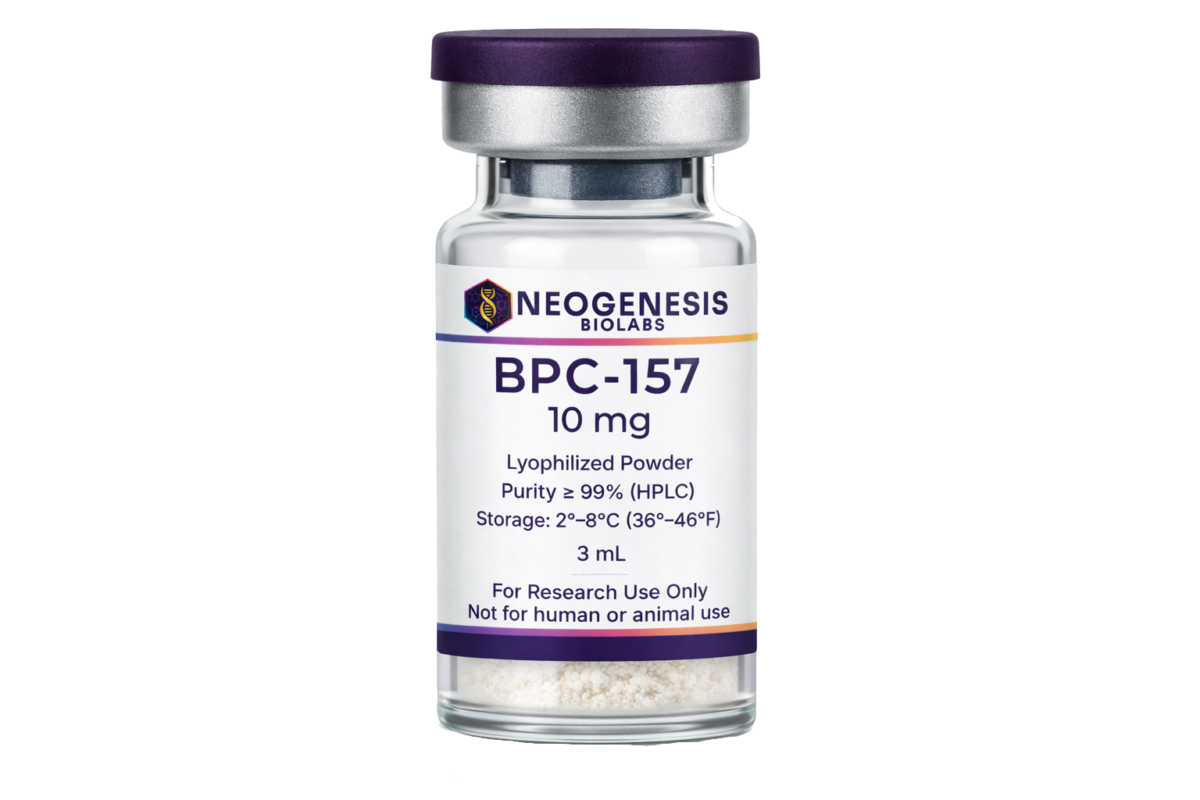
Form
Lyophilized powder
Purity
>=99% (HPLC)
Molecular Weight
1419.5 Da
Storage
2-8C, protected from light
Use
For research purposes only. Not for human or animal use.
CAS
137525-51-0
Sequence
Gly-Glu-Pro-Pro-Pro-Gly-Lys-Pro-Ala-Asp-Asp-Ala-Gly-Leu-Val
Recovery
BPC-157
$75.00
99%+ Purity
Lab Tested
Research Grade
Lyophilized
COA Available
Fast Shipping
About This Compound
BPC-157
BPC-157 10mg — Research Overview
BPC-157 (Body Protection Compound-157) is a synthetic pentadecapeptide derived from a protective gastric protein. It is among the most extensively studied peptides in regenerative and tissue repair research, examined for wound healing, angiogenesis, tendon and ligament biology, and gastroprotective pathway studies.
Neogenesis Bio Labs supplies BPC-157 as a lyophilized peptide at ≥99% purity, verified by third-party HPLC and mass spectrometry analysis.
What Researchers Study BPC-157 For
- Tissue Repair — wound healing, cell migration, and regenerative pathway studies across multiple tissue types
- Tendon and Ligament Biology — collagen synthesis, fibroblast activation, and tendon-to-bone healing pathway research
- Angiogenesis — VEGF pathway activation and new blood vessel formation studies
- Gastroprotective Pathways — gastric mucosa integrity, ulcer healing, and GI barrier function research
- Neurological Research — dopaminergic and serotonergic pathway modulation in preclinical CNS models
- Anti-Inflammatory Signaling — cytokine modulation and systemic inflammation pathway studies
Frequently Asked Questions
What is BPC-157 origin and structure?
BPC-157 is a 15-amino acid pentadecapeptide derived from a partial sequence of Body Protection Compound found in gastric juice. Its sequence Gly-Glu-Pro-Pro-Pro-Gly-Lys-Pro-Ala-Asp-Asp-Ala-Gly-Leu-Val was identified for its stability and activity in mucosal protective pathway research.
How does BPC-157 interact with angiogenesis pathways?
Research literature suggests BPC-157 upregulates VEGF expression and activates associated receptor pathways governing new blood vessel formation. This angiogenic activity is thought to underpin many of the tissue repair and wound healing effects observed in preclinical models.
Is BPC-157 often combined with TB-500 in research?
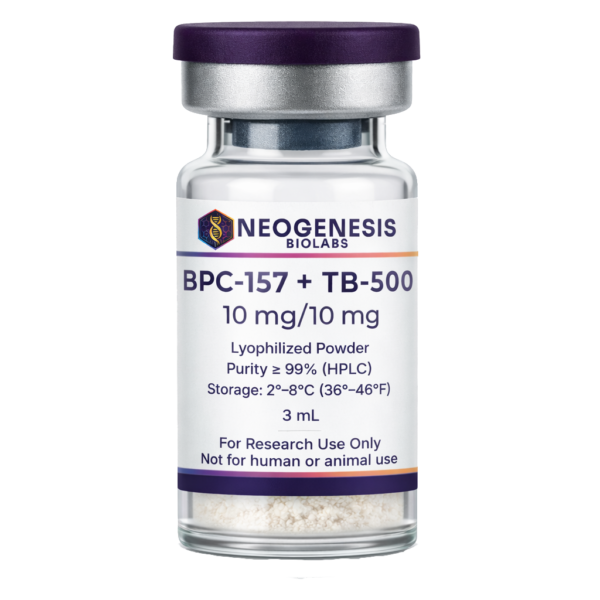
BPC-157 and TB-500 are frequently co-studied because their mechanisms are complementary — BPC-157 for local tissue repair and angiogenesis, TB-500 for actin regulation and systemic cell migration signaling. The combination is one of the most studied regenerative peptide stacks in preclinical research.
Is a Certificate of Analysis included?
Yes. Every vial ships with a third-party COA confirming compound identity, purity (≥99% HPLC), and peptide integrity.
For Research Use Only. BPC-157 supplied by Neogenesis Bio Labs is intended exclusively for in-vitro research, laboratory study, and scientific investigation. Not for human consumption, veterinary use, or clinical application.
You May Also Like
Recommended Products