Form
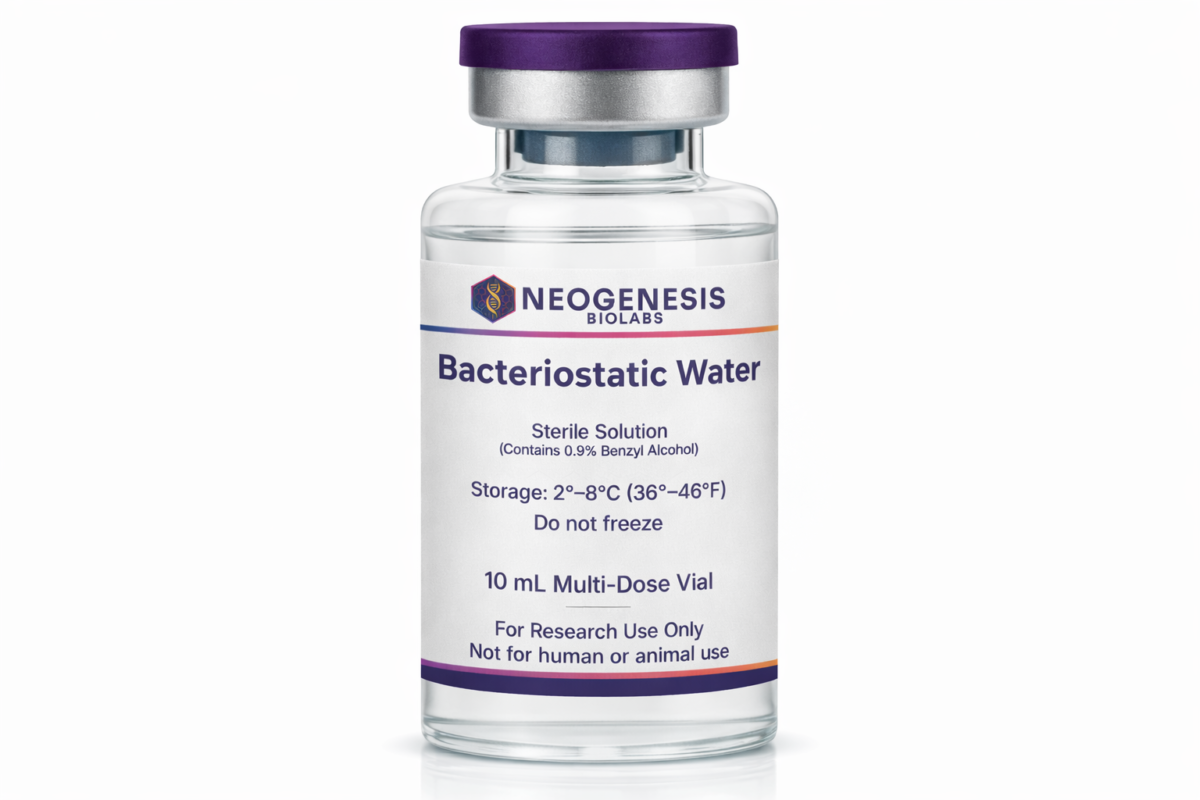
Sterile solution
Storage
2-8C after opening, protected from light
Use
For research purposes only. Not for human or animal use.
Essentials
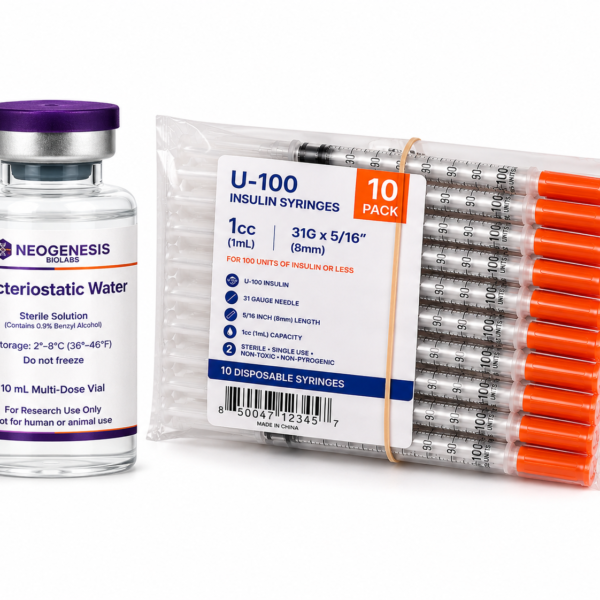
BAC Water
$12.00
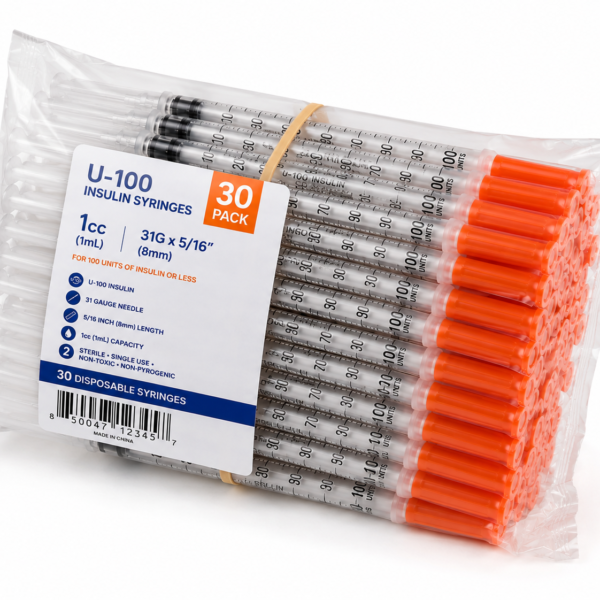
Sterile
Single-Use
31G Ultra-Fine
U-100 1cc
Research Grade
Fast Shipping
About This Product
BAC Water
Bacteriostatic Water 10mL — Research Overview
Bacteriostatic Water (BAC Water) is sterile water preserved with 0.9% benzyl alcohol, produced to USP standards. It is the standard diluent used in laboratory settings for reconstituting lyophilized peptides and research compounds. The benzyl alcohol preservative inhibits bacterial growth, maintaining solution sterility across multiple uses.
Why BAC Water Is Used in Peptide Research
- Bacteriostasis — 0.9% benzyl alcohol inhibits bacterial contamination across multiple-use vials
- Peptide Stability — neutral pH and sterile formulation preserve peptide structure and activity post-reconstitution
- Multi-Use Safety — preservative allows multiple withdrawals without sterility compromise
- Universal Compatibility — suitable for reconstituting BPC-157, TB-500, Semaglutide, Tirzepatide, Tesamorelin, and most lyophilized research peptides
- Laboratory Standard — the preferred reconstitution medium for extended-use peptide solutions in preclinical research settings
Frequently Asked Questions
Why use BAC Water instead of sterile water?
Plain sterile water contains no preservative — once the septum is punctured, bacterial contamination risk increases with each use. BAC Water 0.9% benzyl alcohol actively inhibits microbial growth, making it appropriate for multi-dose research vials accessed repeatedly over days or weeks.
How long does reconstituted peptide remain stable in BAC Water?
Most lyophilized peptides reconstituted with BAC Water maintain stability for 28-30 days when stored at or below 4°C. Some larger or more complex peptides may have shorter windows. Reconstituted solutions should never be frozen.
How much BAC Water is needed to reconstitute a peptide vial?
Reconstitution volume depends on the peptide quantity and desired research concentration. Adding 1mL to a 5mg vial produces a 5mg/mL solution; adding 2mL produces 2.5mg/mL. Volume is a research protocol decision based on target concentration requirements.
For Research Use Only. BAC Water supplied by Neogenesis Bio Labs is intended exclusively for laboratory use as a reconstitution diluent for lyophilized research compounds. Not for human consumption, veterinary use, or clinical application.